
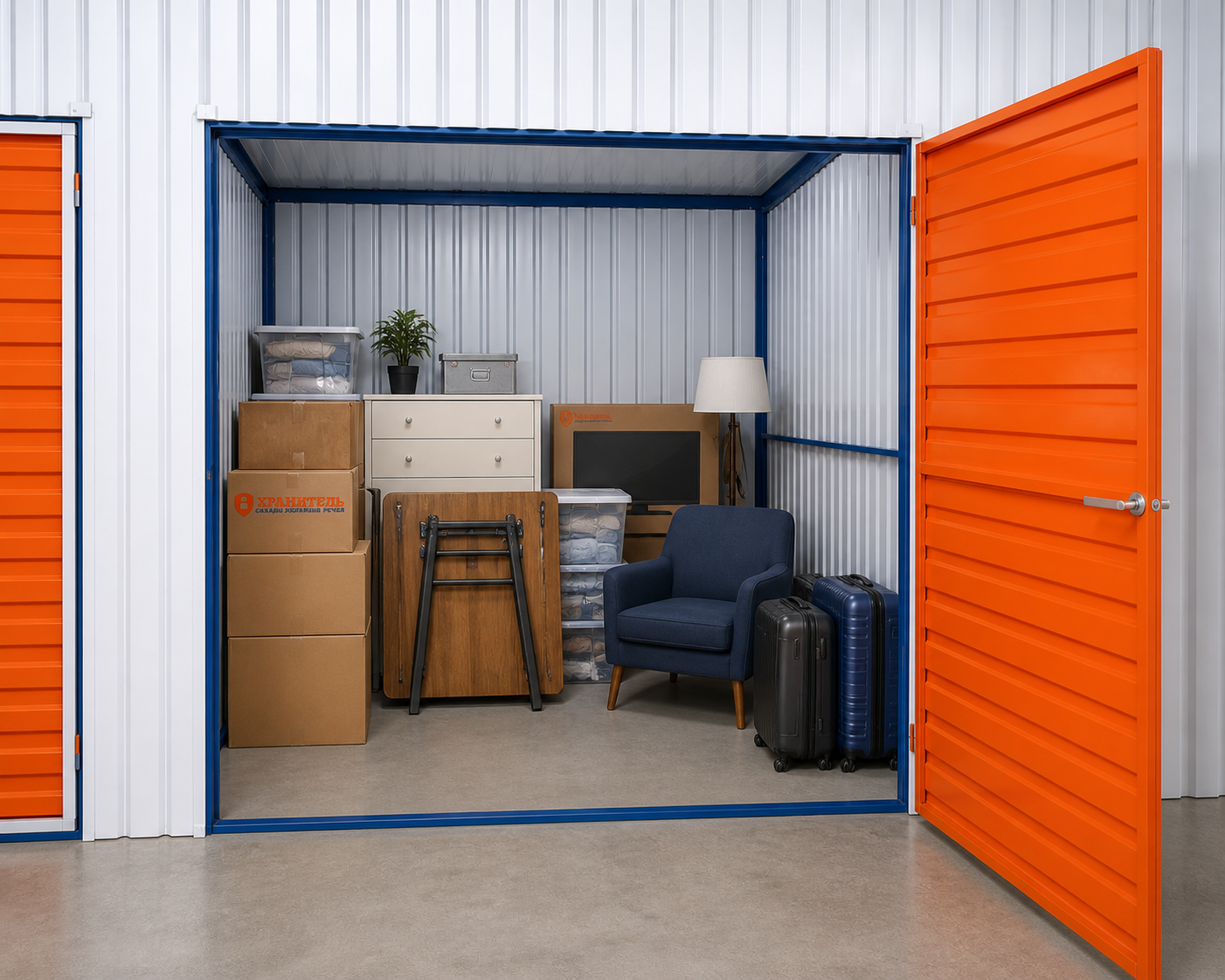
The right size is not the largest available unit. It is the smallest space where belongings remain safe and reasonably accessible.
Start with an inventory, not square metres
Separate large furniture, boxes and unusually shaped items. Mark everything that you expect to access regularly.
Measure large furniture and count the boxes. A rough guess then becomes a practical layout plan.
Preserve a walkway
Avoid filling the room from the entrance to the back wall. A narrow walkway can be more valuable than one extra stack of boxes.
Place long-term items at the back and seasonal or frequently used belongings near the entrance.
Use vertical space safely
Strong boxes of the same size can be stacked. Keep heavy items at the bottom, light ones above and never use fragile objects as a base.
Shelving uses the room efficiently while keeping separate categories accessible.
Approximate size guide
Boxes, seasonal items, tyres and the contents of a small room.
Furniture and appliances from a one-bedroom apartment.
A complete move or roughly one medium moving van.
A large apartment, equipment or inventory for a business.
Check before choosing
- How many large items cannot be disassembled
- How many boxes you expect after packing
- Whether regular access is required
- Whether more items will be added during the rental
Have the estimate checked
If you are choosing between two sizes, send the manager an inventory or a few photos. We will help select enough room without wasted metres.
Share this useful article